With this project I tired to look into different types of a psychological horror and a different type of horror film and not just have the typical horror films that we have now a days. so what I did was to take take a typical horror film and add a different twist to it and make it unique.
After a lot of researching differentdistributors I believe that Universal Pictures would release our film as I have seen that they distribute a wide variety of films from different genres, such as a comedy like 'evan almighty', a horror such as 'unborn' and thrillers such as the 'bourne' series. Looking at this they do not mind as to which type of film to distribute, as our film classifying as a horror, we would come to think that these will be no problem having Universal Pictures distribute our film.
Our film received numerous of positive feedback from the targeted audience as it meet their expectation once it was done. I heard a lot of positive comments for the audience, it was said by someone is they were watching TV and this opening came across they would watch it as it made them want to carry on watching. The thing I found hard to do was trying to explain the whole plot in just a few minutes so people would understand what was happening.
During this course I have learned about the proper use of camara angles and how to use lighting to make the scene more effective. I also learned how to use different types of program such as adobe premiere cs6 and adobe after effect which at first was complicated but after asking someone that knows how to use these programs to teach you how to us it and practicing how to use it can really pay of.
Looking back at my preliminary task and comparing it to my main task, I believe that after looking at my preliminary task and looking at how I edit it and looking of my edit for the final task has been a huge improvement as after i knew how to used adobe cs6 and things looked easy. However I also believe that i did see some difficulties that i faced while creating a film instead of few seconds of footage, be it editing or co-ordinating actors.
To conclude, while doing this course i have learned that creating and editing a film is a lot harder than it looks, I also learned that you need to be dedicated to the fullest which it was something I was lacking. I think if i take on A2 next year i would be more dedicated as i would now how much is need from you.
During the preliminary task I realized that this gave us a chance to get to know the equipment we would be using but also gave us a chance to feel confident with the equipment. As I was doing the preliminary task I learned have to use the camera correctly, I also learned how to use Adobe Premiere Pro CS6 and familiarize with the different tools in the software and knowing what each tool was used for. This task also gave us a chance to practice the different angles and seeing which angles would look best in each scene I would pick to film, while doing this I found out that not all angles would work with certain shots and I also found out that you need to pick your camera angles carefully as the different camera angles give the audience a different understanding of what's happening in the film. This came up in the main task a few times, but we overcame the situation as we would pick a better angle.
On the hand we also had bad aspects of this task, as we had a script and wanted to change at the last minute as most people were doing the same thing, we had to let our actor do what they wanted to do, more or less over actors had to improvise their lines and it began an issues when I had to edit it. But more or less I thought that this task was a positive outcome.
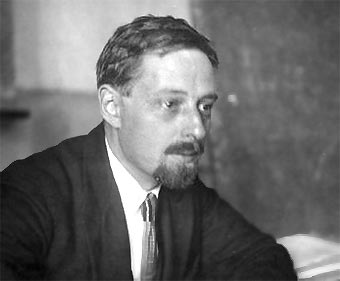
Vladimir Yakovlevich Propp was a Sovietformalist scholar who analyzed the basic plot components of Russian folk tales to identify their simplest irreducible narrative elements.
Biography
Vladimir Propp was born on April 17, 1895 in St. Petersburg to a German family. He attended St. Petersburg University (1913–1918) majoring in Russian and German philology. Upon graduation he taught Russian and German at a secondary school and then became a college teacher of German.
His Morphology of the Folktale was published in Russian in 1928. Although it represented a breakthrough in both folkloristics and morphology and influenced Claude Lévi-Strauss and Roland Barthes, it was generally unnoticed in the West until it was translated in 1958. His character types are used in media education and can be applied to almost any story, be it in literature, theatre, film, television series, games, etc.
In 1932, Propp became a member of Leningrad University (formerly St. Petersburg University) faculty. After 1938, he shifted the focus of his research from linguistics to folklore. He chaired the Department of Folklore until it became part of the Department of Russian Literature. Propp remained a faculty member until his death in 1970.
What did Vladimir Propp do?
Vladimir Propp broke up fairy tales into sections, with these sections he was able to identify series of sequences that will occur in fairy tales, Vladimir was then able to find eight types of characters that appeared in hundreds of fairy tales that he called 'spheres of action'.
These where the typical characters that he found:
The Hero - A character that that seeks something. In every story there will be a major character with whom the reader will normally associate most strongly and who is the key person in which the story is being told around. However this person may often be a hero in some sense but also my take another form such as a victim or a seeker after some treasure or knowledge or maybe they might all of these.
The Villain - Who opposes or actively block the hero's quest. The sharpest contrast against the hero is the villain. The Villain is typically the bad guy highlighting the goodness of the Hero The Villain my seek to prevent the hero from achieving their goals or their guest, they might also be a tempter, such as when Darth Vader tries to seduce Luke Skywalker over to the dark side.
The Donor - Who provides the Hero with an object or something special, such as a magical weapon or some particular wisdom. This role may be combined with the Helper.
The Dispatcher - Who sends the hero on his/her quest via a message. This could be a family member such as the mother or the father. It can also be the Princess Father, who will give the Hero a set of quests to be completed before he gains the hand of the Princess. The Dispatcher may also be combined with another role, for example the False Hero.
The False Hero - Who disrupts the hero's success by making false claims. This means that the False Hero will try and steal the Hero's identity and take credit and perhaps trying to marry the Princess instead. The False Hero is a imposter, a thief perhaps of the worst kind, who will play on people's good nature to boldly steal in broad daylight. The False Hero may also gain the respect of the Princess Father which will frustrate the Hero's ability to gain the hand of the Princess.
The Princess - Acts as the reward for the Hero and the object of the villain's plots.
Her Father - Who acts to reward the Hero for his effort.
After going through Vladimir Propp's Theory. I then applied his theory to a horror film trailer.
Cabin in the woods
After watching the trailer and a few clips from the film, I then analysed the trailer and the clips using Propp's theory on Narrative Convention and this is what I found out.
After watching this clip the first time around I started looking at the characters and looking at what their roles are in the film. The second time round I started analyzing the characters using Propp's Theory.
By looking at the characters and using his theory I was seeing that the guy in the green and yellow jacket looks to be a Hero but I think that as the film progress we will see him as the False Hero. The guy with the blue shirt look to be the Donor as he is the wise man of the group and is trying to help everyone out.
In this clip we still is the guy that was wearing the yellow and green jacket at the Hero, as his still leading the group. The girl in this clip is sort of starting being shown as a Hero as she is helping the leader close the door.
After watching the trailer and these two clips I decided to watch the film so I could have a better understanding of the characters and so I could also analyse the characters better as I would be able to see their roles throughout the film and be able to put them in the right category of Propp's theory. As it was really hard to put them in the right category without knowing the plot of the film fully. After watching the film I was clear on what the role of each character was and here are my findings.
The Hero
The Hero - She is the Hero because she has a dramastic change in her personality throughout the film. In the film you see her grown into a Hero. At the end of the film you will see her as a strong leader but also the fact that she is the last one standing.
The Princess
The Princess - She is the Princess because she is who the 'False Hero' is trying to save and look after throughout the film.
The False Hero
The False Hero - He is the the False Hero as throughout the film we see him as the leader of the group finding out ways to escape and save everyone. This is until he is killed highlighting his immortality.
The Helper
The Helper - He is the Helper because throughout the film you see him helping the Hero multiple times and at one point even saves her from death.
The Donor
The Donor - He is the Donor because he is the wise man of the group and is continually helping the Hero out.
The Dispatcher
The Dispatcher - In someway this character is the Dispatcher because he is secondary to the Villain. His her main worker as he has the power to control all the others workers and he is also deciding the character quest in the film, for example his behind the death of the characters as he has set the traps.
The Villain
The Villain - She is the Villain, she is the leader behind all the evil act of murder. This is shown by the power she has over people, what she is doing to them and the amount of workers she has. You can also see that she is the Villain as in the film you only she her near the end and because the Dispatcher is doing all her dirty work as she sits and watches. Propp's Theory also found 31 functions that happens in a fairytales and they are: Refence: http://en.wikipedia.org/wiki/Vladimir_Propp#Functions
ABSENTATION: A member of a family leaves the security of the home environment. This may be the hero or some other member of the family that the hero will later need to rescue. This division of the cohesive family injects initial tension into the storyline. The hero may also be introduced here, often being shown as an ordinary person.
INTERDICTION: An interdiction is addressed to the hero ('don't go there', 'don't do this'). The hero is warned against some action (given an 'interdiction').
VIOLATION of INTERDICTION. The interdiction is violated (villain enters the tale). This generally proves to be a bad move and the villain enters the story, although not necessarily confronting the hero. Perhaps they are just a lurking presence or perhaps they attack the family whilst the hero is away.
RECONNAISSANCE: The villain makes an attempt at reconnaissance (either villain tries to find the children/jewels etc.; or intended victim questions the villain). The villain (often in disguise) makes an active attempt at seeking information, for example searching for something valuable or trying to actively capture someone. They may speak with a member of the family who innocently divulges information. They may also seek to meet the hero, perhaps knowing already the hero is special in some way.
DELIVERY: The villain gains information about the victim. The villain's seeking now pays off and he or she now acquires some form of information, often about the hero or victim. Other information can be gained, for example about a map or treasure location.
TRICKERY: The villain attempts to deceive the victim to take possession of victim or victim's belongings (trickery; villain disguised, tries to win confidence of victim). The villain now presses further, often using the information gained in seeking to deceive the hero or victim in some way, perhaps appearing in disguise. This may include capture of the victim, getting the hero to give the villain something or persuading them that the villain is actually a friend and thereby gaining collaboration.
COMPLICITY: Victim taken in by deception, unwittingly helping the enemy. The trickery of the villain now works and the hero or victim naively acts in a way that helps the villain. This may range from providing the villain with something (perhaps a map or magical weapon) to actively working against good people (perhaps the villain has persuaded the hero that these other people are actually bad).
VILLAINY or LACK: Villain causes harm/injury to family member (by abduction, theft of magical agent, spoiling crops, plunders in other forms, causes a disappearance, expels someone, casts spell on someone, substitutes child etc., commits murder, imprisons/detains someone, threatens forced marriage, provides nightly torments); Alternatively, a member of family lacks something or desires something (magical potion etc.). There are two options for this function, either or both of which may appear in the story. In the first option, the villain causes some kind of harm, for example carrying away a victim or the desired magical object (which must be then be retrieved). In the second option, a sense of lack is identified, for example in the hero's family or within a community, whereby something is identified as lost or something becomes desirable for some reason, for example a magical object that will save people in some way.
MEDIATION: Misfortune or lack is made known, (hero is dispatched, hears call for help etc./ alternative is that victimized hero is sent away, freed from imprisonment). The hero now discovers the act of villainy or lack, perhaps finding their family or community devastated or caught up in a state of anguish and woe.
BEGINNING COUNTER-ACTION: Seeker agrees to, or decides upon counter-action. The hero now decides to act in a way that will resolve the lack, for example finding a needed magical item, rescuing those who are captured or otherwise defeating the villain. This is a defining moment for the hero as this is the decision that sets the course of future actions and by which a previously ordinary person takes on the mantle of heroism.
DEPARTURE: Hero leaves home;
FIRST FUNCTION OF THE DONOR: Hero is tested, interrogated, attacked etc., preparing the way for his/her receiving magical agent or helper (donor);
HERO'S REACTION: Hero reacts to actions of future donor (withstands/fails the test, frees captive, reconciles disputants, performs service, uses adversary's powers against him);
RECEIPT OF A MAGICAL AGENT: Hero acquires use of a magical agent (directly transferred, located, purchased, prepared, spontaneously appears, eaten/drunk, help offered by other characters);
GUIDANCE: Hero is transferred, delivered or led to whereabouts of an object of the search;
STRUGGLE: Hero and villain join in direct combat;
BRANDING: Hero is branded (wounded/marked, receives ring or scarf);
VICTORY: Villain is defeated (killed in combat, defeated in contest, killed while asleep, banished);
LIQUIDATION: Initial misfortune or lack is resolved (object of search distributed, spell broken, slain person revived, captive freed);
RETURN: Hero returns;
PURSUIT: Hero is pursued (pursuer tries to kill, eat, undermine the hero);
RESCUE: Hero is rescued from pursuit (obstacles delay pursuer, hero hides or is hidden, hero transforms unrecognisably, hero saved from attempt on his/her life);
UNRECOGNIZED ARRIVAL: Hero unrecognized, arrives home or in another country;
DIFFICULT TASK: Difficult task proposed to the hero (trial by ordeal, riddles, test of strength/endurance, other tasks);
SOLUTION: Task is resolved;
RECOGNITION: Hero is recognized (by mark, brand, or thing given to him/her);
EXPOSURE: False hero or villain is exposed;
TRANSFIGURATION: Hero is given a new appearance (is made whole, handsome, new garments etc.);
PUNISHMENT: Villain is punished;
WEDDING: Hero marries and ascends the throne (is rewarded/promoted).
Occasionally, some of these functions are inverted, as when the hero receives something whilst still at home, the function of a donor occurring early. More often, a function is negated twice, so that it must be repeated three times in Western cultures.
Evaluation:
Over all I think that Vladimir Propp Theory on the eight character types can be seen in many horror films and many other types of film genres. However I feel that his thirty one functions are correct in the aspects of fairy tales but all of the thirty one sequences don't appear in horror movies some do but, not always in that order and some tend to be missing.