Thursday, 9 May 2013

Final Task Evaluation


Final Task Evaluation  


With this project I tired to look into different types of a psychological horror and a different type of horror film and not just have the typical horror films that we have now a days. so what I did was to take take a typical horror film and add a different twist to it and make it unique.

After a lot of researching different distributors I believe that Universal Pictures would release our film as I have seen that they distribute a wide variety of films from different genres, such as a comedy like 'evan almighty', a horror such as 'unborn' and thrillers such as the 'bourne' series. Looking at this they do not mind as to which type of film to distribute, as our film classifying as a horror, we would come to think that these will be no problem having  Universal Pictures distribute our film.

Our film received numerous of positive feedback from the targeted audience as it meet their expectation once it was done. I heard a lot of positive comments for the audience, it was said by someone is they were watching TV and this opening came across they would watch it as it made them want to carry on watching. The thing I found hard to do was trying to explain the whole plot in just a few minutes so people would understand what was happening. 

During this course I have learned about the proper use of camara angles and how to use lighting to make the scene more effective. I also learned how to use different types of program such as adobe premiere cs6 and adobe after effect  which at first was complicated but after asking someone that knows how to use these programs to teach you how to us it and practicing how to use it can really pay of.  

Looking back at my preliminary task and comparing it to my main task, I believe that after looking at my preliminary task and looking at how I edit it and looking of my edit for the final task has been a huge improvement as after i knew how to used adobe cs6 and things looked easy. However I also believe that i did see some difficulties that i faced while creating a film instead of few seconds of footage, be it editing or co-ordinating actors.

To conclude, while doing this course i have learned that creating and editing a film is a lot harder than it looks, I also learned that you need to be dedicated to the fullest which it was something I was lacking. I think if i take on A2 next year i would be more dedicated as i would now how much is need from you.  
 

I

Main Task - Remains


Remains


After hours of filming and editing (and staying up for 2 days) I have finally finished my film.

And here it is, the opening to my film "REMAINS"


Saturday, 4 May 2013

Preliminary Task Evaluation


Preliminary Task Evaluation


During the preliminary task I realized that this gave us a chance to get to know the equipment we would be using but also gave us a chance to feel confident with the equipment. As I was doing the preliminary task I learned have to use the camera correctly, I also learned how to use Adobe Premiere Pro CS6 and familiarize with the different tools in the software and knowing what each tool was used for. This task also gave us a chance to practice the different angles and seeing which angles would look best in each scene I would pick to film, while doing this I found out that not all angles would work with certain shots and I also found out that you need to pick your camera angles carefully as the different camera angles give the audience a different understanding of what's happening in the film. This came up in the main task a few times, but we overcame the situation as we would pick a better angle. 

On the hand we also had bad aspects of this task, as we had a script and wanted to change at the last minute as most people were doing the same thing, we had to let our actor do what they wanted to do, more or less over actors had to improvise their lines and it began an issues when I had to edit it. But more or less I thought that this task was a positive outcome.

Propp's Theory on Narrative Convention


 Propp's Theory on Narrative Convention


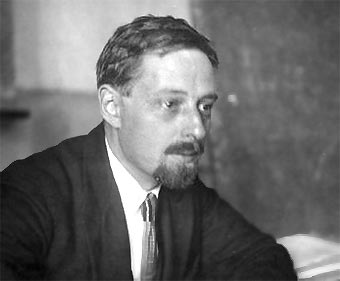
Vladimir Yakovlevich Propp  was a Soviet formalist scholar who analyzed the basic plot components of Russian folk tales to identify their simplest irreducible narrative elements.

Biography 


Vladimir Propp was born on April 17, 1895 in St. Petersburg to a German family. He attended St. Petersburg University (1913–1918) majoring in Russian and German philology. Upon graduation he taught Russian and German at a secondary school and then became a college teacher of German.
His Morphology of the Folktale was published in Russian in 1928. Although it represented a breakthrough in both folkloristics and morphology and influenced Claude Lévi-Strauss and Roland Barthes, it was generally unnoticed in the West until it was translated in 1958. His character types are used in media education and can be applied to almost any story, be it in literature, theatre, film, television series, games, etc.
In 1932, Propp became a member of Leningrad University (formerly St. Petersburg University) faculty. After 1938, he shifted the focus of his research from linguistics to folklore. He chaired the Department of Folklore until it became part of the Department of Russian Literature. Propp remained a faculty member until his death in 1970.

What did Vladimir Propp do?

Vladimir Propp broke up fairy tales into sections, with these sections he was able to identify series of sequences that will occur in fairy tales, Vladimir was then able to find eight types of characters that appeared in hundreds of fairy tales that he called 'spheres of action'.

These where the typical characters that he found:

  • The Hero - A character that that seeks something. In every story there will be a major character with whom the reader will normally associate most strongly and who is the key  person in which the story is being told around. However this person may often be a hero in some sense but also my take another form such as a victim or a seeker after some treasure or knowledge or maybe they might all of these.
  • The Villain - Who opposes or actively block the hero's quest. The sharpest contrast against the hero is the villain. The Villain is typically the bad guy highlighting the goodness of the Hero The Villain my seek to prevent the hero from achieving their goals or their guest, they might also be a tempter, such as when Darth Vader tries to seduce Luke Skywalker over to the dark side.
  • The Donor - Who provides the Hero with an object or something special, such as a magical weapon or some particular wisdom. This role may be combined with the Helper.
  • The Dispatcher - Who sends the hero on his/her quest via a message. This could be a family member such as the mother or the father. It can also be the Princess Father, who will give the Hero a set of quests to be completed before he gains the hand of the Princess. The Dispatcher may also be combined with another role, for example the False Hero.
  • The False Hero - Who disrupts the hero's success by making false claims. This means that the False Hero will try and steal the Hero's identity and take credit and perhaps trying to marry the Princess instead. The False Hero is a imposter, a thief perhaps of the worst kind, who will play on people's good nature to boldly steal in broad daylight. The False Hero may also gain the respect of the Princess Father which will frustrate the Hero's ability to gain the hand of the Princess. 
  • The Princess - Acts as the reward for the Hero and the object of the villain's plots.
  • Her Father - Who acts to reward the Hero for his effort.

After going through Vladimir Propp's Theory. I then applied his theory to a horror film trailer.  

Cabin in the woods


After watching the trailer and a few clips from the film, I then analysed the trailer and the clips using Propp's theory on Narrative Convention and this is what I found out.


After watching this clip the first time around I started looking at the characters and looking at what their roles are in the film. The second time round I started analyzing the characters using Propp's Theory. 
By looking at the characters and using his theory I was seeing that the  guy in the green and yellow jacket looks to be a Hero but I think  that as the film progress we will see him as the False Hero. The guy with the blue shirt look to be the Donor  as he is the wise man of the group and is trying to help everyone out.


In this clip we still is the guy that was wearing the yellow and green jacket at the Hero, as his still leading the group. The girl in this clip is sort of starting being shown as a Hero as she is helping the leader close the door.


After watching the trailer and these two clips I decided  to watch the film so I could have a better understanding of the characters and so I could also analyse the characters better as I would be able to see their roles throughout the film and be able to put them in the right category of Propp's theory. As it was really hard to put them in the right category without knowing the plot of the film fully.

After watching the film I was clear on what the role of each character was and here are my findings.
The Hero


The Hero - She is the Hero because she has a dramastic change in her personality throughout the film. In the film you see her grown into a Hero. At the end of the film you will see her as a strong leader but also the fact that she is the last one standing.  
The Princess


 The Princess - She is the Princess because she is who the 'False Hero' is trying to save and look after throughout the film. 

The False Hero


The False Hero - He is the the False Hero as throughout the film we see him as the leader of the group finding out ways to escape and save everyone. This is until he is killed highlighting his immortality.


The Helper


The Helper - He is the Helper because throughout the film you see him helping the Hero multiple times and at one point even saves her from death.


The Donor


The Donor - He is the Donor because he is the wise man of the group and is continually helping the Hero out.  


The Dispatcher


The Dispatcher - In someway this character is the Dispatcher because he is secondary to the Villain. His her main worker as he has the power to control all the others workers and he is also deciding the character quest in the film, for example his behind the death of the characters as he has set the traps. 

The Villain


The Villain - She is the Villain, she is the leader behind all the evil act of murder. This is shown by the power she has over people, what she is doing to them and the amount of workers she has. You can also see that she is the Villain as in the film you only she her near the end and because the Dispatcher is doing all her dirty work as she sits and watches.


Propp's Theory also found 31 functions that happens in a fairytales and they are:

Refence: http://en.wikipedia.org/wiki/Vladimir_Propp#Functions

  1. ABSENTATION: A member of a family leaves the security of the home environment. This may be the hero or some other member of the family that the hero will later need to rescue. This division of the cohesive family injects initial tension into the storyline. The hero may also be introduced here, often being shown as an ordinary person.
  2. INTERDICTION: An interdiction is addressed to the hero ('don't go there', 'don't do this'). The hero is warned against some action (given an 'interdiction').
  3. VIOLATION of INTERDICTION. The interdiction is violated (villain enters the tale). This generally proves to be a bad move and the villain enters the story, although not necessarily confronting the hero. Perhaps they are just a lurking presence or perhaps they attack the family whilst the hero is away.
  4. RECONNAISSANCE: The villain makes an attempt at reconnaissance (either villain tries to find the children/jewels etc.; or intended victim questions the villain). The villain (often in disguise) makes an active attempt at seeking information, for example searching for something valuable or trying to actively capture someone. They may speak with a member of the family who innocently divulges information. They may also seek to meet the hero, perhaps knowing already the hero is special in some way.
  5. DELIVERY: The villain gains information about the victim. The villain's seeking now pays off and he or she now acquires some form of information, often about the hero or victim. Other information can be gained, for example about a map or treasure location.
  6. TRICKERY: The villain attempts to deceive the victim to take possession of victim or victim's belongings (trickery; villain disguised, tries to win confidence of victim). The villain now presses further, often using the information gained in seeking to deceive the hero or victim in some way, perhaps appearing in disguise. This may include capture of the victim, getting the hero to give the villain something or persuading them that the villain is actually a friend and thereby gaining collaboration.
  7. COMPLICITY: Victim taken in by deception, unwittingly helping the enemy. The trickery of the villain now works and the hero or victim naively acts in a way that helps the villain. This may range from providing the villain with something (perhaps a map or magical weapon) to actively working against good people (perhaps the villain has persuaded the hero that these other people are actually bad).
  8. VILLAINY or LACK: Villain causes harm/injury to family member (by abduction, theft of magical agent, spoiling crops, plunders in other forms, causes a disappearance, expels someone, casts spell on someone, substitutes child etc., commits murder, imprisons/detains someone, threatens forced marriage, provides nightly torments); Alternatively, a member of family lacks something or desires something (magical potion etc.). There are two options for this function, either or both of which may appear in the story. In the first option, the villain causes some kind of harm, for example carrying away a victim or the desired magical object (which must be then be retrieved). In the second option, a sense of lack is identified, for example in the hero's family or within a community, whereby something is identified as lost or something becomes desirable for some reason, for example a magical object that will save people in some way.
  9. MEDIATION: Misfortune or lack is made known, (hero is dispatched, hears call for help etc./ alternative is that victimized hero is sent away, freed from imprisonment). The hero now discovers the act of villainy or lack, perhaps finding their family or community devastated or caught up in a state of anguish and woe.
  10. BEGINNING COUNTER-ACTION: Seeker agrees to, or decides upon counter-action. The hero now decides to act in a way that will resolve the lack, for example finding a needed magical item, rescuing those who are captured or otherwise defeating the villain. This is a defining moment for the hero as this is the decision that sets the course of future actions and by which a previously ordinary person takes on the mantle of heroism.
  11. DEPARTURE: Hero leaves home;
  12. FIRST FUNCTION OF THE DONOR: Hero is tested, interrogated, attacked etc., preparing the way for his/her receiving magical agent or helper (donor);
  13. HERO'S REACTION: Hero reacts to actions of future donor (withstands/fails the test, frees captive, reconciles disputants, performs service, uses adversary's powers against him);
  14. RECEIPT OF A MAGICAL AGENT: Hero acquires use of a magical agent (directly transferred, located, purchased, prepared, spontaneously appears, eaten/drunk, help offered by other characters);
  15. GUIDANCE: Hero is transferred, delivered or led to whereabouts of an object of the search;
  16. STRUGGLE: Hero and villain join in direct combat;
  17. BRANDING: Hero is branded (wounded/marked, receives ring or scarf);
  18. VICTORY: Villain is defeated (killed in combat, defeated in contest, killed while asleep, banished);
  19. LIQUIDATION: Initial misfortune or lack is resolved (object of search distributed, spell broken, slain person revived, captive freed);
  20. RETURN: Hero returns;
  21. PURSUIT: Hero is pursued (pursuer tries to kill, eat, undermine the hero);
  22. RESCUE: Hero is rescued from pursuit (obstacles delay pursuer, hero hides or is hidden, hero transforms unrecognisably, hero saved from attempt on his/her life);
  23. UNRECOGNIZED ARRIVAL: Hero unrecognized, arrives home or in another country;
  24. UNFOUNDED CLAIMS: False hero presents unfounded claims;
  25. DIFFICULT TASK: Difficult task proposed to the hero (trial by ordeal, riddles, test of strength/endurance, other tasks);
  26. SOLUTION: Task is resolved;
  27. RECOGNITION: Hero is recognized (by mark, brand, or thing given to him/her);
  28. EXPOSURE: False hero or villain is exposed;
  29. TRANSFIGURATION: Hero is given a new appearance (is made whole, handsome, new garments etc.);
  30. PUNISHMENT: Villain is punished;
  31. WEDDING: Hero marries and ascends the throne (is rewarded/promoted).
Occasionally, some of these functions are inverted, as when the hero receives something whilst still at home, the function of a donor occurring early. More often, a function is negated twice, so that it must be repeated three times in Western cultures.

 Evaluation: 

Over all I think that Vladimir Propp Theory on the eight character types can be seen in many horror films and many other types of film genres. However I feel that his thirty one functions are correct in the aspects of fairy tales but all of the thirty one sequences don't appear in horror movies some do but, not always in that order and some tend to be missing.

Friday, 12 April 2013

Coming up with names


Coming up with names for title 


after we had the plot and we knew exactly what we were going to do we started to come up with names for our film.

here what we came up with:

> Remains
> Vengeance 
> Embers
> Linger 
> Ashes
> Ego
> Last Time
> Disclosure 
> Endure 
> Forgotten
> Satisfaction 

after a lot of arguing about the name we wanted, we couldn't pick between 

>  Remains
> Vengeance
> Ashes

We then came to the conclusion of having  the name as Remains. 

Wednesday, 10 April 2013

Scprit


Scprit


Script:
In the library Johan, Ruben, Cristian, Gloria, Akua and Hamdi are talking about the long spoken myth of Blair. The quite girl that won the role of the head cheerleader and got the most popular girl in the school jealous that she got her role as head cheerleader and wanted to get her back for it, so is got Blair’s crush to lower her into the basement to lock her in for a few hours. But what they don’t is that a gas pipe bust.
They all whispering

Hamdi: Hey guys, have you lot ever heard of the myth of Blair?
Ruben: What the hell is the myth of Blair?
Akua: Ohhh I have heard of that myth...... Is about that girl that came to this school 5 years ago isn’t it.
Hamdi: Yeah that myth.
Johan: It’s just a myth, what makes you guys so sure it’s true.
Gloria: Yeah, but I guess it can be true you never know. But one thing I know Blair did come to this school.
Cristian: We should go to see to place after school who is up for it???
Hamdi: I am so up for it
Akua: So I am
Ruben: Count me in
Cristian: Whatever, I have nothing better to do count me in
Johan: I guess....(everyone looks at him) I am up for it.
Hamdi: Gloria??? (Everyone looks at Gloria)
Gloria: Guys I don’t think this a good idea...
Akua: Come on Gloria what’s the worst that could happen....It will be fun
Gloria: I guess so... if anything happen I am out of there.
Hamdi: Cool so that’s everyone
Johan: Yep
Hamdi: Lets meet up at 2:40 near the Art room.

After school at 2:40 outside the Art room.

Ruben: You guys ready...
Johan: so Hamdi tell us a bit of this myth before we go in there.
Hamdi:  so it all started with a quiet girl named Blair...

Flash back
Catia in the library doing her work.
Flash back over

Akua: and she tried out for the cheerleading squad...and ended up getting the role of cheerleading....
Hamdi: And this got the most popular girl in school jealous as she wanted the head role.

Flash back
Catia checking list for the new cheerleading squad, see she got the lead role and jumps for joy. Then walks away happily. Micky walks to the notice broad and she that she didn’t get any role, rips the paper and walks away angrily.
Flash back over

Akua: And as a way to get her back for stealing her role...

They start walking down the stairs

Hamdi:  She gets Blair’s crush Martin to lower her in the basement

Flash back
Martin walks up to Catia in the library and flirts with Catia and told her to meet him in the basement.

Martin: Hey Baby (Sit downs next to her)
Catia: Heyy.... (Putting  her book down, looking up and quickly looking down as she see who it is)
Martin: (grabs her hand) I know you have a little crush on me for a while now and I have secretly have had crush on you too... (lifts up her chin)
Catia: (Looks away)
Martin: So how about you meet me down in the basement....
Catia: Why the basement?
Martin : Short way to the car park.... don’t want micky to see me with you...don’t really want to give her a reason to hurt you (smile at her)
Catia: Okay (Smiles)
Martin gets up and walks away and Catia smiles
Flash back over

Gloria: And as she walks down to the basement

Flash back
Catia walking down stairs
Flash back over

Gloria: And walks in to the basement calling for Martin and never hears a reply she gets pushed by Micky.

Flash back
Micky pushing Catia into the basement and locks her in and walks away with her group.
Flash back over

Hamdi: And they were only meant to leave her there for a hour....
Akua: But they forgot about her...

Walking into the basement

Gloria: But what they didn’t know is that a gas pipe burst...And Burn to death

Door slam shut behind Gloria and Catia appears behind her.
Film Title


Putting the ideas together


Putting the ideas together


we were now probably to ready start planning for our main task. Not posting anything on it for a while as I have been doing most of the planning on paper. so now  I am going put everything on my blog.

My partner and I decided to change the plot of our main task so we were back to stage 1.
As we still wanted to do a horror film so we started brainstorming again.


the sub-genre the my partner Gloria and I  Psychological horror - Psychological horror are horror films that will rely on the characters's fears, guilt, beliefs, eerie sound effects, tense and suspense building music, emotional instability and it may contain elements of the supernatural and ghosts. We choose this sub-genre because it goes perfectly with our plot for our main task and it's the type of film we want to film.

We came up with a story board but we lost it and we didn't have enough time to make another one so we just left it.  


Wednesday, 13 February 2013

Case Study of a Director


Brian De Palma


Brian Russell De Palma (born September 11, 1940) is an American film director and screenwriter. In a career spanning over 40 years, he is probably best known for his suspense and crime thriller films, including such box office successes as the horror film Carrie, Dressed to Kill, Scarface, The Untouchables, and Mission: Impossible.
De Palma's films can fall into two categories, his psychological thrillers (Sisters, Obsession, Dressed to Kill, Blow Out, Raising Cain) and his mainly commercial films (Scarface, The Untouchables, Carlito's Way, and Mission: Impossible). He has often produced "De Palma" films one after the other before going on to direct a different genre, but would always return to his familiar territory. Because of the subject matter and graphic violence of some of De Palma's films, such as Dressed to Kill, Scarface and Body Double, they are often at the center of controversy with the Motion Picture Association of America, film critics and the viewing public.
De Palma is known for quoting and referencing other director's work throughout his career. Michelangelo Antonioni's Blowup and Francis Ford Coppola's The Conversation plots were used for the basis of Blow Out. The Untouchables' finale shoot out in the train station is a clear borrow from the Odessa Steps sequence in Sergei Eisenstein's The Battleship Potemkin. The main plot from Rear Window was used for Body Double, while it also used elements of Vertigo. Vertigo was also the basis for Obsession. Dressed to Kill was a note-for-note homage to Hitchcock's Psycho, including such moments as the surprise death of the lead actress and the exposition scene by the psychiatrist at the end.


Tuesday, 12 February 2013

Our Film Genres and Sub-Genres


Our Film Genres and Sub-Genres

For our film genres we have picked  Horror, we then looked in depth of these film genres and we looked into each of the genres's sub-genres.


Horror Sub-Genres ( Main Task )

  • Action Horror - Action horror is a combination od the intrusion of an evil force, event or a supernatrual persona of a horror movie that will have the gunfights and frebetic chases of the action genre. Examples of these sub genres include: Resident Evil, Ghost Rider, Plant of terror, Undead, Doomsday, Underworld, Priest, Dawn of the Dead, Blade and End of Days.
  • Body horror - A body horror film is when the principal of the film is deruved from the graphic destruction or degeneration of the body, this means that in these types of film you will see unnartual movements or the anatomically incorrect placement of the limbs. Examples of these sub genres include: Altered States, The Invasion, The Fly, Rosemary's Baby, Eraserhead, The Thing, Re-Animator, Hellraiser, Videodrome, Cabin Fever, Virus and Teeth.
  • Comedy horror - Comedy horror are a combination of comedy genre and and horror fiction. The short story 'The Legend of Sleepy Hollow' by Washington Irving is cited as "the first great comedy-horror story" Examples of these sub genres include: An American Werewolf in London, The Rocky Horror Picture Show, Gremlins, Bad Taste, Braindead, Beetlejuice, Arachnophobia, Terror Firmer, Eight Legged Freaks, Shaun of the Dead, Evil Dead II, Tucker & Dale vs Evil, and Slither.
  • Gothic horror - A Gothic horror films are the type of film that will combine the elements of goth and horror combine into one film. Sometimes gothic horror films will have the element of romance that will unfold into the setting of a horror tale. Examples of these sub genres include: The Phantom of the Opera, Dracula, Frankenstein, Sleepy Hollow, Interview with the Vampire, Underworld, The Wolfman, From Hell, Dorian Gray, Let Me In and The Woman in Black.
  • Natural horror - A Natural horror film features "nature running amok in the form of mutated beasts, carnivorous insects, and normally harmless animals or plants turned into cold-blooded killers." These sub-genres will sometimes overlap with the genres of science fiction and action/adventure. Examples of these sub genres include: The Birds, Black Sheep, Jaws, Mimic, Deep Rising, Them!, The Swarm, Pet Sematary, Lake Placid, Primeval, Anaconda, Snakes on a Plane, The Cave, Piranha 3D and The Ruins.
  • Psychological horror - Psychological horror are horror films that will relie on the characters's fears, guilt, beliefs, eerie sound effects, relevant music, emotional instability and sometimes it will contian the supernatural and ghosts. Examples of these sub genres include: A Tale of Two Sisters, Dark Water, Gothika, Ring, Ju-on: The Grudge, The Exorcist, Session 9, Silent Hill, The Others, The Mothman Prophecies, The Blair Witch Project, 1408, The Shining, Stir of Echoes, The Innocents, Frailty, Sinister (film) The Changeling, and The Sixth Sense.
  • Science Fiction horror - Science Fiction horror film will often revolve around the subject of killer aliens, mad scuentist or experiments gone wrong. Examples of these sub genres include: Alien, Pandorum, The Fly, Event Horizon, Apollo 18, Doom, Pitch Black, The Mist, and It Came from Outer Space.
  • Slasher film - Slasher film will often recole around a psychopathic killer stalking and killing a sequence of victims in a graphically violent manner and always with a cutting tool such as a knife or axe. the Slasher film sub-genres will always overlap with crime, mystery and thriller genres. Examples of these sub genres include: Psycho, Black Christmas, Halloween, The Texas Chain Saw Massacre, Prom Night, Scream, Pieces, Hatchet, Friday the 13th, Child's Play, Candyman, and A Nightmare on Elm Street.

  • Splatter film - Splatter films are will focus on graphic portrayals of gore and graphic violence, by using special effects and excessive blood and guts. They will display an overt interest in the vulnerability of the human bodyand the theatricality of it's mutilation. Examples of these sub genres include: Cannibal Holocaust, Piranha 3D, Blood Feast, Demons, Saw, Guinea Pig (film series), Hostel, Hostel: Part II, Cannibal Ferox, Martyrs, Hobo with a Shotgun, Inside, The Collector, and The Midnight Meat Train.
  • Zombie film -Zombie films will feature creatures who are usually portrayed as either corpses or mindless human beings. Examples of these sub genres include: Dawn of the Dead, Day of the Dead, The Evil Dead, I Am Legend, Dead Snow, Land of the Dead, Night of the Living Dead, REC and The Return of the Living Dead.

the sub-genre the my partner Gloria and I  Psychological horror - Psychological horror are horror films that will rely on the characters's fears, guilt, beliefs, eerie sound effects, tense and suspense building music, emotional instability and it may contain elements of the supernatural and ghosts. We choose this sub-genre because it goes perfectly with our plot for our main task and it's the type of film we want to film.


Friday, 8 February 2013

Film Genres and Sub-Genres


       Film Genres and Sub-Genres


We started research Film Genres and Sub-Genres and in which category both of our films fit in. As you know we have choosen our BBFC rating and we found out that both of our films fit in with the BBFC rating 15, now we are about which category our films fits with the best and also what sub-genre our with suit best.

I got this infromation from http://www.filmsite.org/genres.html


Genre Types

Genre Descriptions

Action films usually include high energy, big-budget physical stunts and chases, possibly with rescues, battles, fights, escapes, destructive crises (floods, explosions, natural disasters, fires, etc.), non-stop motion, spectacular rhythm and pacing, and adventurous, often two-dimensional 'good-guy' heroes (or recently, heroines) battling 'bad guys' - all designed for pure audience escapism.
Adventure films are usually exciting stories, with new experiences or exotic locations, very similar to or often paired with the action film genre. They can include traditional swashbucklers, serialized films, and historical spectacles, searches or expeditions for lost continents, "jungle" and "desert" epics, treasure hunts, disaster films, or searches for the unknown.
Comedies are light-hearted plots consistently and deliberately designed to amuse and provoke laughter (with one-liners, jokes, etc.) by exaggerating the situation, the language, action, relationships and characters.

Crime (gangster) films are developed around the sinister actions of criminals or mobsters, particularly bankrobbers, underworld figures, or ruthless hoodlums who operate outside the law, stealing and murdering their way through life
Dramas are serious, plot-driven presentations, portraying realistic characters, settings, life situations, and stories involving intense character development and interaction. Usually, they are not focused on special-effects, comedy, or action, Dramatic films are probably the largest film genre, with many subsets
Epics often share elements of the elaborate adventure films genre. Epics take an historical or imagined event, mythic, legendary, or heroic figure, and add an extravagant setting and lavish costumes, accompanied by grandeur and spectacle, dramatic scope, high production values, and a sweeping musical score. Epics are often a more spectacular, lavish version of a biopic film.

Horror films are designed to frighten and to invoke our hidden worst fears, often in a terrifying, shocking finale, while captivating and entertaining us at the same time in a cathartic experience. Horror films feature a wide range of styles, from the earliest silent Nosferatu classic, to today's CGI monsters and deranged humans. They are often combined with science fiction when the menace or monster is related to a corruption of technology, or when Earth is threatened by aliens. The fantasy and supernatural film genres are not usually synonymous with the horror genre
Musical/dance films are cinematic forms that emphasize full-scale scores or song and dance routines in a significant way (usually with a musical or dance performance integrated as part of the film narrative), or they are films that are centred on combinations of music, dance, song or choreography.
Sci-fi films visionary and imaginative - complete with heroes, aliens, distant planets, impossible quests, improbable settings, fantastic places, great dark and shadowy villains, futuristic technology and unknowable forces, and extraordinary monsters ('things or creatures from space') They are sometimes an offshoot of fantasy films, or they share some similarities with adventure films. Science fiction often expresses the potential of technology to destroy humankind and easily overlaps with horror films, particularly when technology or alien life forms become malevolent.
War (and anti-war) films acknowledge the horror and heartbreak of war, letting the actual combat fighting (against nations or humankind) on land, sea, or in the air provide the primary plot or background for the action of the film.
Westerns are the major defining genre of the American film industry - a eulogy to the early days of the expansive American frontier. They are one of the oldest, most enduring genres with very recognizable plots, elements, and characters (six-guns, horses, dusty towns and trails, cowboys, Indians, etc.). Over time, westerns have been re-defined, re-invented and expanded, dismissed, re-discovered, and spoofed.
'Biopics' is a term derived from the combination of the words "biography" and "pictures. Although they reached a hey-day of popularity in the 1930s, they are still prominent to this day. These films depict the life of an important historical personage (or group) from the past or present era. Biopics cross many genre types, since these films might showcase a western outlaw, a criminal, a musical composer, a religious figure, a war-time hero, an entertainer, an artist, an inventor or doctor, a politician or President, or an adventurer.
Often considered an all-encompassing sub-genre, 'chick' flicks or gal films (slightly derisive terms) mostly include formulated romantic comedies (with mis-matched lovers or female relationships), tearjerkers and gal-pal films, movies about family crises and emotional carthasis, some traditional 'weepies' and fantasy-action adventures, sometimes with foul-mouthed and empowered females, and female bonding situations involving families, mothers, daughters, children, women, and women's issues. These films are often told from the female P-O-V, and star a female protagonist or heroine
Detective-mystery films are usually considered a sub-type or sub-genre of crime/gangster films (or film noir), or suspense or thriller films that focus on the unsolved crime (usually the murder or disappearance of one or more of the characters, or a theft), and on the central character - the hard-boiled detective-hero, as he/she meets various adventures and challenges in the cold and methodical pursuit of the criminal or the solution to the crime.
Disaster films, a sub-genre of action films, hit their peak in the decade of the 1970s. Big-budget disaster films provided all-star casts and interlocking, Grand Hotel-type stories, with suspenseful action and impending crises (man-made or natural) in locales such as aboard imperiled airliners, trains, dirigibles, sinking or wrecked ocean-liners, or in towering burning skyscrapers, crowded stadiums or earthquake zones.
Fantasy films, usually considered a sub-genre, are most likely to overlap with the film genres of science fiction and horror, although they are distinct. Fantasies take the audience to netherworld places (or another dimension) where events are unlikely to occur in real life - they transcend the bounds of human possibility and physical laws. They often have an element of magic, myth, wonder, and the extraordinary. One of the major categories of fantasy-action films are the super-hero movies, based quite often on original comic-strip or comic book character. They may appeal to both children and adults, depending upon the particular film.
Film noir (meaning 'black film') is a distinct branch of the crime/gangster sagas from the 1930s. Strictly speaking, film noir is not a genre, but rather the mood, style or tone of various American films that evolved in the 1940s, and lasted in a classic period until about 1960. However, film noir has not been exclusively confined to this era, and has re-occurred in cyclical form in other years in various neo-noirs. Noirs are usually black and white films with primary moods of melancholy, alienation, bleakness, disillusionment, disenchantment, pessimism, ambiguity, moral corruption, evil, guilt and paranoia. And they often feature a cynical, loner hero (anti-hero) and femme fatale, in a seedy big city
Composed of macho films that are often packed with sophomoric humour, action, cartoon violence, competition, mean-spirited putdowns and gratuitous nudity and sex. Gal films or 'chick' flicks are their counterpart for females. This category of film is highly subject to opinion.
Melodramas are a sub-type of drama films, characterized by a plot to appeal to the emotions of the audience. Often, film studies criticism used the term 'melodrama' pejoratively to connote an unrealistic, pathos-filled tales of romance or domestic situations with stereotypical characters that would directly appeal to feminine audiences ("weepies" or "woman's films").
Road films have been a staple of American films from the very start, and have ranged in genres from westerns, comedies, gangster/crime films, dramas, and action-adventure films. One thing they all have in common: an episodic journey on the open road (or undiscovered trail), to search for escape or to engage in a quest for some kind of goal -- either a distinct destination, or the attainment of love, freedom, mobility, redemption, the finding or rediscovering of oneself, or coming-of-age (psychologically or spiritually).
A sub-genre for the most part, this category shares some features with romantic dramas, romantic comedies, and sexual/erotic films. These are love stories, or affairs of the heart that center on passion, emotion, and the romantic, affectionate involvement of the main characters (usually a leading man and lady), and the journey that their love takes through courtship or marriage. Romance films make the love story the main plot focus
Films that have a sports setting (football or baseball stadium, arena, or the Olympics, etc.), event (the 'big game,' 'fight,' 'race,' or 'competition'), and/or athlete (boxer, racer, surfer, etc.) that are central and predominant in the story. Sports films may be fictional or non-fictional; and they are a hybrid sub-genre category,
Supernatural films, a sub-genre category, may be combined with other genres, including comedy, sci-fi, fantasy or horror. They have themes including gods or goddesses, ghosts, apparitions, spirits, miracles, and other similar ideas or depictions of extraordinary phenomena. Interestingly however, until recently, supernatural films were usually presented in a comical, whimsical, or a romantic fashion, and were not designed to frighten the audience. There are also many hybrids that have combinations of fear, fantasy, horror, romance, and comedy.


Thrillers are often hybrids with other genres - there are action-thrillers, crime-caper thrillers, western-thrillers, film-noir thrillers, even romantic comedy-thrillers. Another closely-related genre is the horror film genre. Thriller and suspense films are virtually synonymous and interchangeable categorizations. They are types of films known to promote intense excitement, suspense, a high level of anticipation, ultra-heightened expectation, uncertainty, anxiety, and nerve-wracking tension.


we have looked through the genres and we have seen that for our preliminary the main genre is detective-mystery films and for our main task the genre is horror.